Attic Insulation in Davisville, ON
Air sealing, blown-in top-ups, spray foam and insulation removal for Davisville houses. We pick the work after we have looked in the attic.
We do attic insulation in Davisville, from the side streets of Davisville Village to the houses around Yonge-Eglinton and Lytton Park. We're about 2 km away, and this page covers attic insulation in North Toronto's M4S, M4P and M4R postal codes. In any of these houses, we first check how much insulation is up there and whether any of it is wet or damaged. Then we quote only that.
Davisville houses from the 1920s and 1930s
Many single family homes in Davisville were built in the 1920s and 1930s, and plenty of them are still standing. In Davisville Village, on the streets between Yonge-Eglinton and Mount Pleasant Cemetery, that means a lot of attics have sat above heated rooms for a long time. An attic that old may hold thin or uneven insulation. The layer may have settled, been flattened by storage boxes, or been topped up in one corner and left bare in another.
We look at what is up there before we suggest anything. We check first and quote only what will help, and we work that way on every attic insulation job.
Topping up a dry older layer
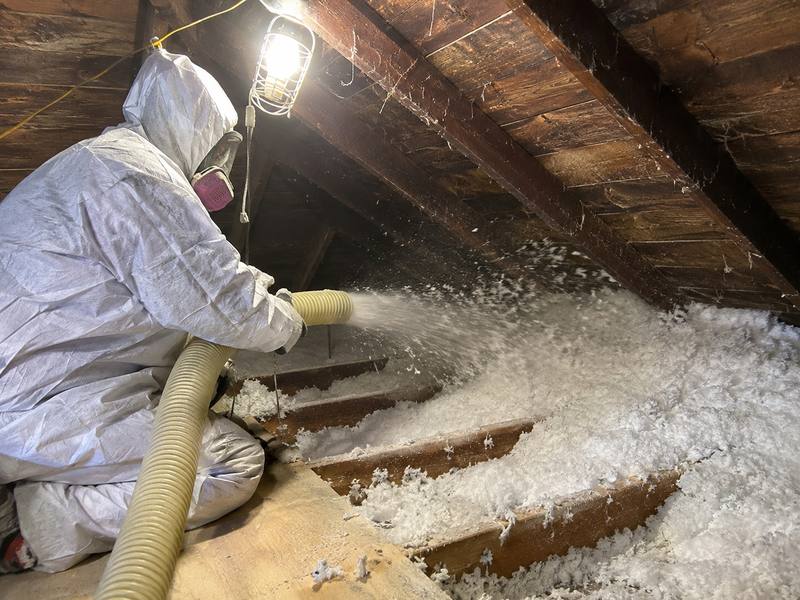
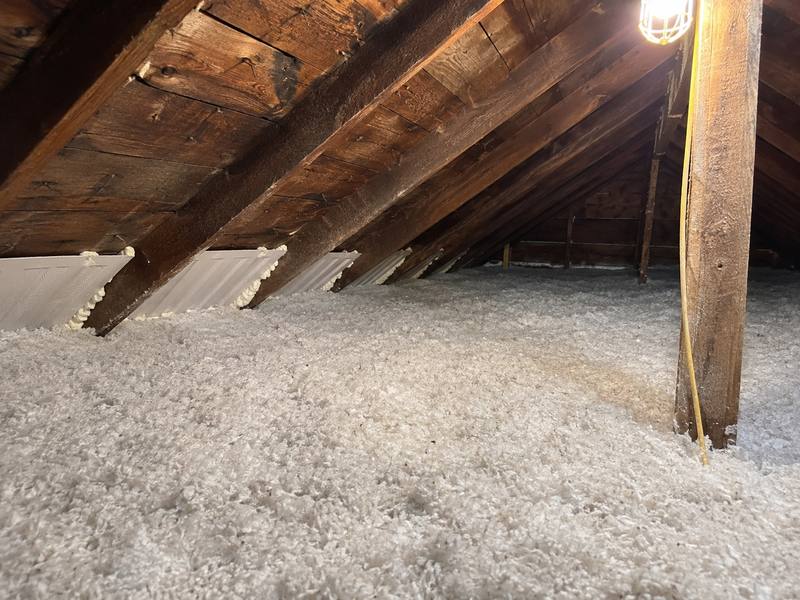
If the old insulation is dry and clean, blown-in insulation can go straight over it. A blowing machine pushes loose-fill cellulose or fibreglass through a hose, and we spread it across and between the ceiling joists to an even depth. On a patchy attic floor, getting that depth even does more for you than the brand of fill.
Removing wet or damaged insulation
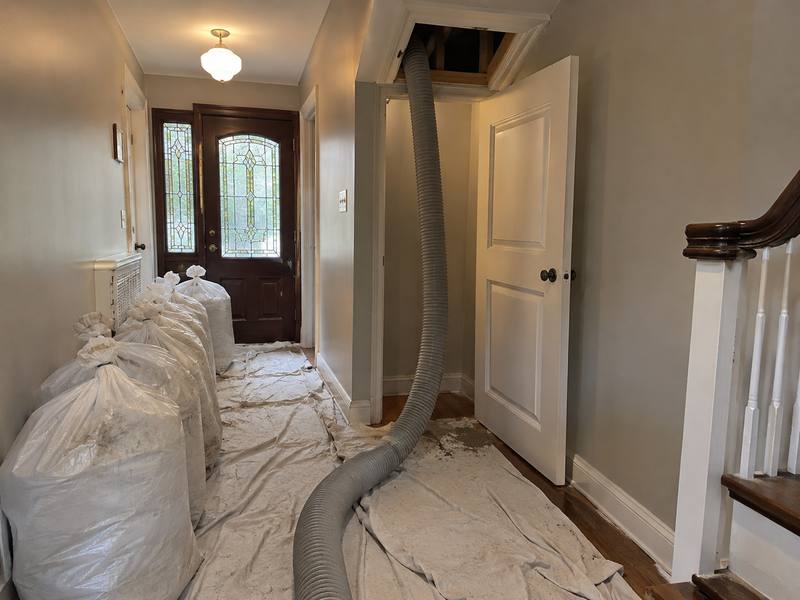
If the old material is wet, smells of mould or has had rodents nesting in it, it comes out first through attic insulation removal. A high powered vacuum pulls the loose fill through a hose into bags outside, so none of it travels through the house. If we find vermiculite, a grey-brown pebbly fill, we stop and leave it alone. We recommend you have it tested by a qualified lab or abatement firm before any work goes ahead.
Lytton Park and Yonge-Eglinton
Lytton Park is mostly Georgian and Tudor style houses, many built from 1890 to 1930. Some are older than the Davisville streets to the south, and the attic above one of them may carry several owners' worth of patching.
If you live in a condominium near Yonge-Eglinton, the roof space belongs to the building. This page is about houses with their own attic.
Old insulation behind new finishes
A renovated house can have old insulation sitting above new drywall, pot lights and a fresh ceiling. The rooms look finished, but nobody may have touched the attic. If your renovation stopped at the top-floor ceiling, the insulation above it is whatever the house had before.
Narrow spaces under a finished top floor
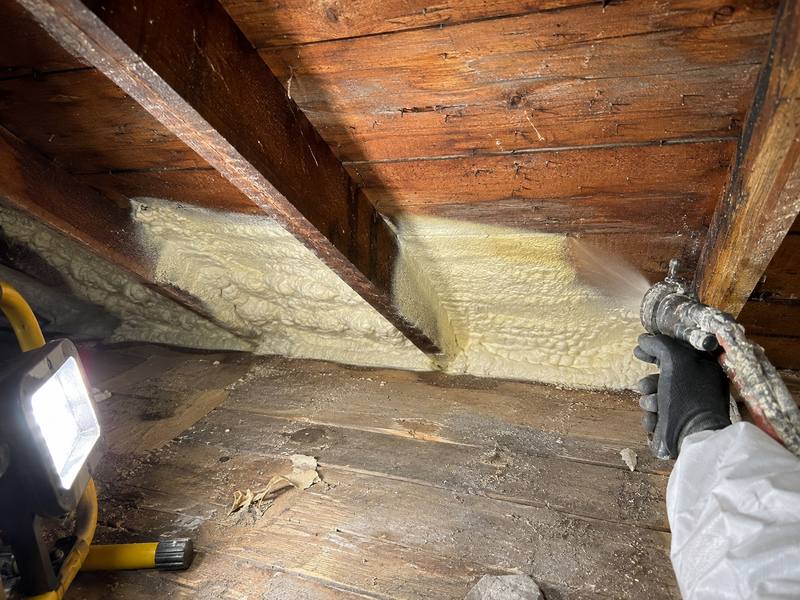
If your house has a finished top floor with knee walls or a shallow gap under the roof, loose fill may not have room to sit at full depth. Spray foam suits those spots better. Closed-cell foam bonds to the framing and insulates in a thin layer, and it seals the gaps around it in the same pass.
Air sealing in older Davisville houses
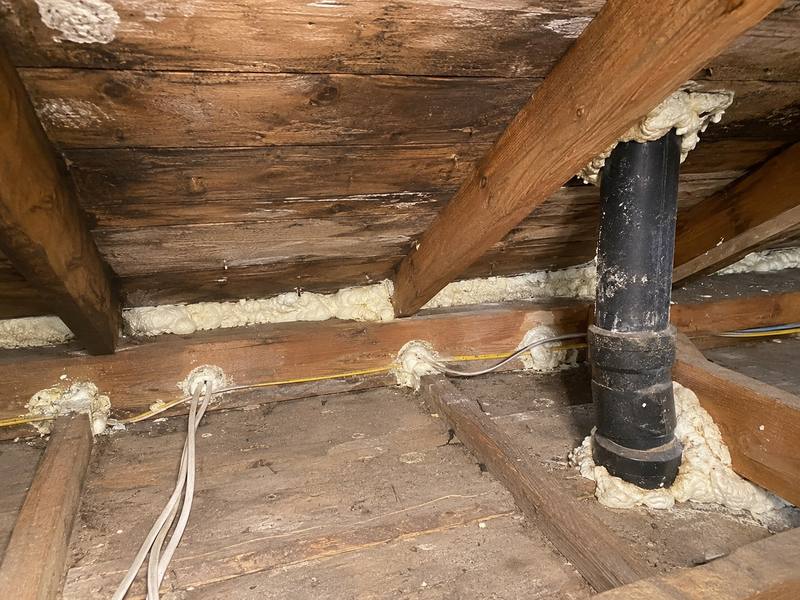
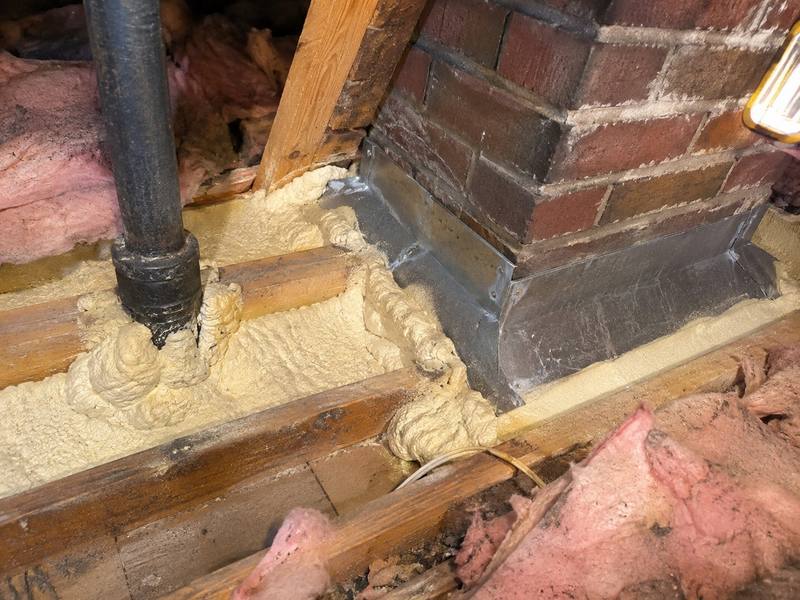
In most houses this age, air sealing comes before a top-up, because insulation slows heat but does not stop moving air. In winter, warm air rises from the rooms below and escapes through openings in the attic floor: gaps around light fixtures, plumbing stacks, the chimney chase, wiring holes in the top plates of interior walls, and an unsealed attic hatch.
Leave those openings and the new insulation on top of them loses part of its value. Warm, damp air from the house can also condense on the cold underside of the roof deck. When we do air sealing, we pull back the existing insulation at each leak, close it with spray foam or caulk, and fit a gasket to the hatch. The top-up then goes over a floor that holds the heat in.
Nearby: Moore Park, Forest Hill and Summerhill
We look at the neighbourhoods next to Davisville the same way, paying attention to how each house was built. Across the cemetery to the south-east we cover attic insulation in Moore Park. Forest Hill is to the west and Summerhill is to the south. Each of those pages covers what is particular about its own streets and houses.
Local details for Davisville
- Postal codes: M4S, M4P, M4R
- Distance: About 2 km away in a straight line
- Permit rules: toronto.ca
- Nearby: Moore Park, Forest Hill, Summerhill
About Davisville: Davisville, ON on Wikipedia · Davisville on Google Maps
FAQ
Insulation questions from Davisville
Yes, if the attic floor has open gaps, seal them before adding any new insulation. Warm air escapes through holes around light fixtures, plumbing stacks and the attic hatch, and insulation on its own does not stop it. Sealing first also means nobody has to dig through fresh insulation later to find the leaks.
The methods are the same, but the houses are not. Lytton Park's Georgian and Tudor houses, many built from 1890 to 1930, can be older than the 1920s and 1930s homes in Davisville. Where a house has a finished top floor with tight spaces, spray foam may suit the parts that blown-in fill cannot reach.
Yes. A renovation often stops at the top-floor ceiling and leaves the attic as it was, so new drywall and pot lights can sit under old, thin or damaged insulation. One look in the attic tells us whether it needs a top-up, sealing around the new light fixtures, or nothing at all.

Next step
Request an insulation visit in Davisville
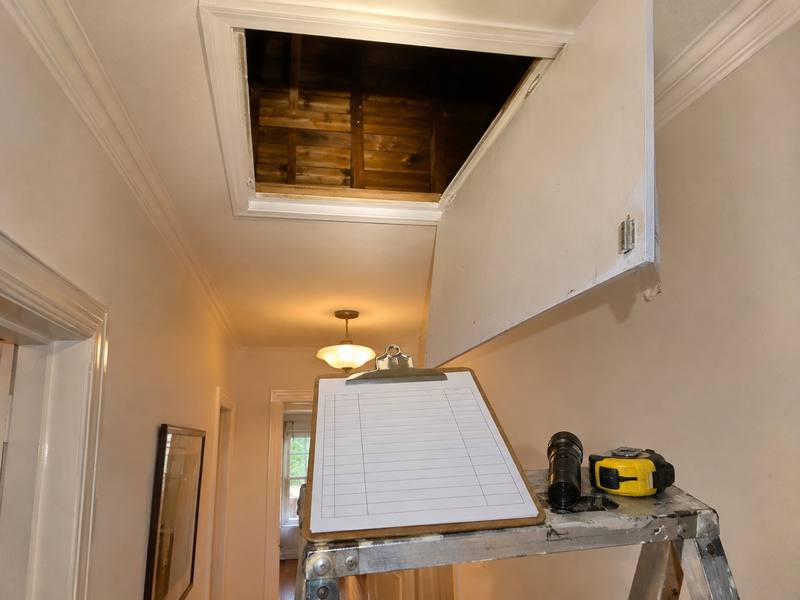
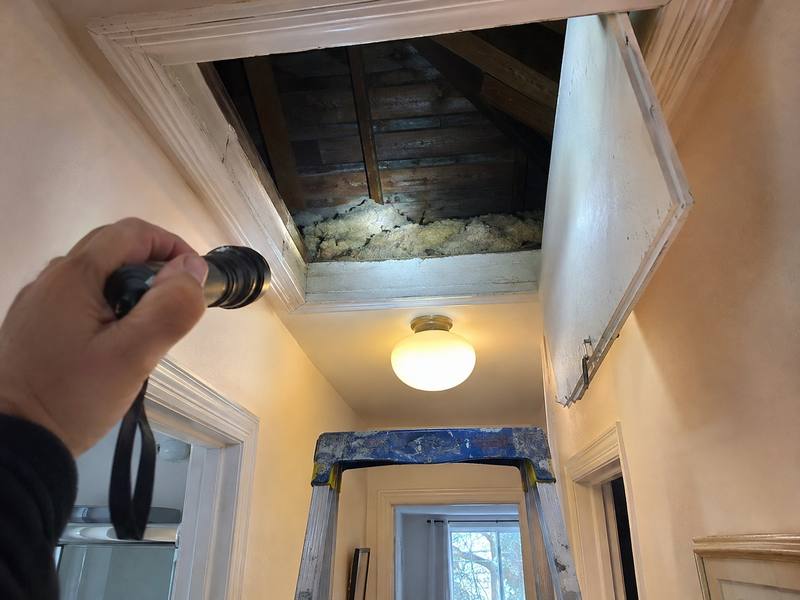
Call us, or send the form with your address and whatever you've noticed upstairs. We'll look at the attic, tell you which of the four outcomes fits, and put the work in a written quote.