Attic Insulation Removal in Toronto, ON
We vacuum out attic insulation that is wet, mouldy or ruined by rodents, seal the bare attic floor, and tell you straight when removal isn't needed.
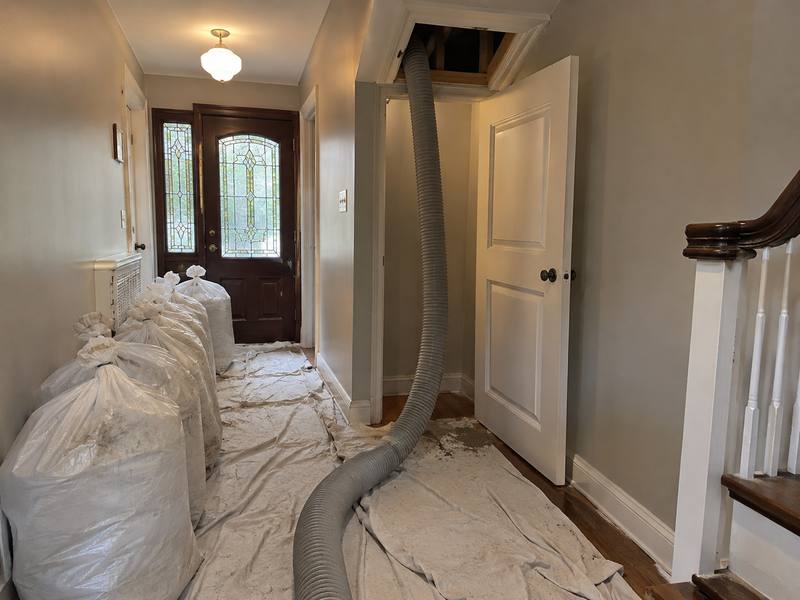
Attic insulation removal in Toronto makes sense when the insulation is wet, mouldy, flattened or soiled by rodents, or when it is covering air leaks in the attic floor that need sealing. A lot of the time it isn't needed. Dry, clean insulation can stay put and get topped up. Vermiculite is its own case: we never disturb it, and we recommend a qualified lab or abatement firm test it first.
When old attic insulation should come out
Old attic insulation should come out when it is wet, mouldy, soiled by rodents, damaged by smoke, or packed so flat it no longer traps air. If it is dry and clean and still sits loose and even between the joists, it can usually stay, and we blow new material in over it. Our guide on whether to top up or remove old attic insulation goes through that decision in more detail.
You can check a lot of this yourself from the hatch with a flashlight and gloves:
- Squeeze a handful. If it's dry and springs back, it can probably stay.
- Look for dark streaks, water rings or clumps under the nail tips and around the chimney. That means water is getting in, and the wet patches need to come out.
- Look for droppings, tunnels, nests or a sour smell. Insulation soiled by rodents comes out.
- Watch for loose, pebbly granules, grey-brown or gold. If you see them, stop. That may be vermiculite: leave it alone and have a qualified lab or abatement firm test it.
- Look across the floor. If the tops of the joists show through in patches, the layer has settled or been crushed, and a top-up may be all it needs.
Wet or water-stained insulation
Wet insulation holds water against the ceiling drywall and the joists, and while it's damp it barely slows heat loss. Cellulose clumps up and stays wet a long time. Fibreglass dries faster, but it stays matted and stained. If a small leak dried out quickly, the insulation may be fine once the leak is fixed. If it stays damp or smells musty, it has to come out.
Rodent-damaged insulation
Mice, rats and squirrels tunnel through loose insulation, nest in it, and leave droppings and urine behind. The smell stays in the material, and the tunnels open gaps where warm air gets out. The usual order is a pest-control company first, to deal with the animals, then we take the insulation out and clean the attic properly before anything new goes in.
Mould on insulation
Mould on insulation looks like dark spotting on batt facings, or on the roof sheathing just above the insulation. The insulation is rarely where it starts. What it tells you is that water or moist house air is getting into the attic. The mould section below covers what to do about that.
Flattened or patchy insulation
Insulation that has been walked on, used for storage or left to settle for decades can end up well below its original depth. If it's otherwise clean and dry, a top-up fixes the thin spots and nothing has to come out. Removal only makes sense when that flattened layer is also hiding air leaks that need sealing.
How attic insulation removal works
We remove attic insulation with an industrial vacuum. The machine stays outside, and a wide hose runs from it through a door or window up to the attic hatch. Our crew works the hose across the attic floor, and the old insulation goes straight into big disposal bags outside. Nobody carries armfuls of it through your house.
Before the hose goes up, we lay drop sheets from the entry to the hatch, cover whatever is under the hatch, and seal the opening around the hose so the dust stays in the attic. Loose fibreglass, cellulose and rock wool all vacuum out. Batts get rolled up and bagged by hand. When the job is done, we take the full bags away for disposal.
Once the old layer is gone, you can see the attic floor for the first time in years. It's the best chance you'll get to find and seal air leaks, fix damaged wood or vents, and clear out droppings and nests along with the insulation.
Vermiculite: stop and test first
Leave vermiculite alone until a qualified lab has tested a sample. Health Canada advises assuming that vermiculite insulation made before 1990 may contain some asbestos. It looks like loose, pebbly granules, grey-brown or gold, poured between the joists like coarse gravel. In some older Toronto attics it sits under a later layer of fibreglass, so you might not spot it from the hatch.
Health Canada says there is no evidence of a health risk if vermiculite insulation stays sealed or isolated in the attic, and that not disturbing it is the best way to keep the risk low. So we never vacuum it, rake it or walk through it. If we find vermiculite, we stop, leave it undisturbed, and recommend you have it tested by a qualified lab or abatement firm before any work goes ahead. If the test finds asbestos, removal is a job for a licensed abatement firm, not us. After they've cleared the attic, we can come back to do the air sealing and the new insulation. Our page on vermiculite attic insulation shows how to recognise it and who removes it.
Mould on attic insulation
Mould on attic insulation means moisture is getting into the attic, and new insulation will go mouldy too unless that moisture is dealt with first. It usually comes from one of these:
- A roof leak at the flashing, a vent boot or a damaged shingle, dripping on the same spot every time it rains.
- A bathroom or kitchen fan that dumps into the attic instead of venting through the roof or a wall.
- Warm, damp house air leaking up through gaps in the ceiling and condensing on the cold roof sheathing in winter.
- Soffit vents buried in insulation, so the moist air has nowhere to go.
Fixing the moisture source before new insulation
The cause gets fixed first. We take out ordinary wet insulation and seal the ceiling leaks that let moist air up. If mould is growing on the sheathing or rafters, we send the remediation to a specialist firm and book our insulation work for after they're done.
Replacing insulation after removal
With the old insulation out, the new insulation goes in over a sealed floor: air sealing first, then baffles, then blown-in insulation. Air sealing will never be easier than it is right now, because later it means digging through a fresh layer. While the floor is bare, these are the things worth sealing or fixing:
- Top plates of interior walls, where plaster or drywall meets the framing and warm air leaks straight up.
- Holes around wiring, plumbing stacks and vent pipes, sealed with foam or caulk.
- Old pot lights and ceiling boxes, fitted with airtight covers.
- The gap around the chimney, closed with sheet metal and fire-rated sealant, never foam against the masonry.
- The attic hatch, weatherstripped and given an insulated cover.
- Bathroom fan ducts, reconnected and run to an outside vent.
- Gaps at the soffits or roof vents where animals got in, pointed out so a pest-control company can deal with them.
- Damaged sheathing, wet joists or loose wiring, flagged so they can be repaired before they're buried again.
Baffles at the eaves
Baffles go in the rafter bays above the outside walls. They stop the new insulation from spilling into the soffit vents, so outside air can still move from the soffits up to the roof vents and take moisture out with it.
New blown-in insulation
Blown-in attic insulation goes in last. Loose fibreglass or cellulose is blown through a hose to an even depth across the whole floor, and it fills in around joists, wiring and blocking much better than batts do. Our main page on attic insulation covers the other ways we keep an attic warm.
What decides the cost of insulation removal
The cost of insulation removal comes down to how much material there is, what kind it is, and how hard it is to reach. The main things that move the number:
- Attic area: a bigger floor means more material and more hours on the hose.
- Depth and type of the old material: deep cellulose, fibreglass layered over older fill, and batts that have to be bagged by hand all take longer.
- Access: a small closet hatch, a low roof pitch or tight eaves slow the crew down.
- Rodent cleanup: droppings and nests bagged out with the old insulation add time.
- What goes back in: air sealing, baffles and how deep the new blown-in insulation goes.
Cost to replace attic insulation
The cost to replace attic insulation is the removal plus the air sealing and new material on top. Our attic insulation cost page walks through those factors. We only quote after we've looked in the attic, because two Toronto houses on the same street can have very different attics.
Is removing old attic insulation worth it?
Often it isn't. If the insulation is dry, clean and free of droppings, it's still slowing heat loss, and pulling it out costs you money without making the house any warmer. A top-up over the old layer, plus sealing the obvious leaks, usually does the job for less.
Removal pays off in two cases. One is when the material itself is damaged: wet, mouldy, smoke-damaged or soiled by rodents. The other is when the attic floor has air leaks that need proper sealing, since sealing through a deep old layer is slow and leaves gaps. Plenty of attics just need air sealing and a top-up, and if that's what we find in yours, we'll say so.
More on Attic Insulation Removal
FAQ
Common questions about attic insulation removal
It depends on the size of the attic, the depth and type of the old insulation, how easy the hatch is to get to, and whether there's rodent cleanup, so we only give a number after seeing the attic. The vacuuming is usually a smaller part of the bill than the air sealing and new insulation that come after. Our quote lists each part of the job separately, so you can see what each one adds.
It's worth it when the insulation is wet, mouldy, soiled by rodents or covering air leaks that need sealing. When it's dry and clean, usually not. Clean, dry insulation still works, so new blown-in insulation can go right on top. We look first and tell you which case your attic falls into.
For loose attic insulation, vacuum removal is the best way: an industrial vacuum pulls the material through a hose straight into disposal bags outside. It keeps dust out of your living space and gets the attic floor cleaner than bagging by hand. Batts are the exception and get rolled up and bagged by hand. Vermiculite shouldn't be vacuumed by anyone until a qualified lab has tested it.
No. Don't remove vermiculite insulation yourself. It may contain asbestos, and disturbing it is what puts fibres in the air. Health Canada advises leaving it undisturbed. Get it tested, and if it contains asbestos, hire a licensed abatement firm to remove it.

Next step
Book an attic insulation inspection in Toronto
Call us, or send the form with your address and whatever you've noticed upstairs. We'll look at the attic, tell you which of the four outcomes fits, and put the work in a written quote.