Attic Insulation in Rosedale, ON
Before we suggest a top-up, spray foam or removal, we look at the old layers, the knee walls and the attic hatch in your Rosedale house.
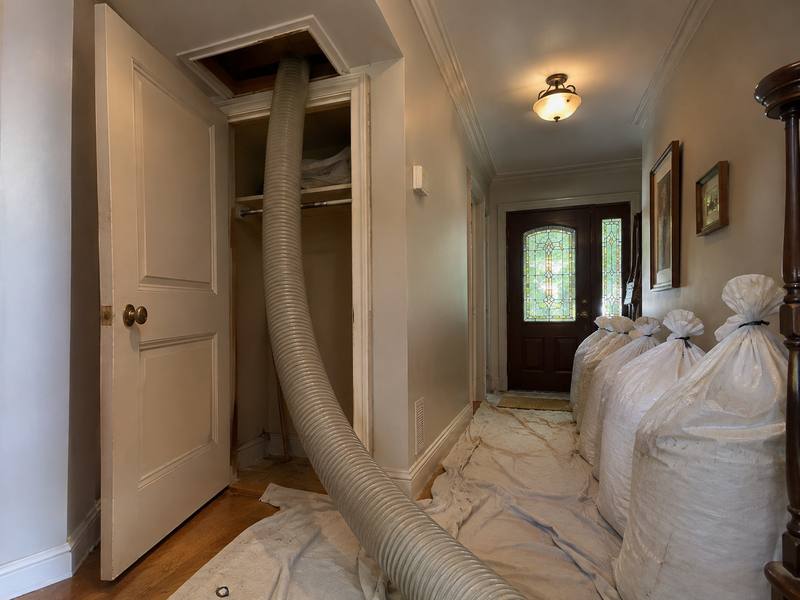
We insulate attics in Rosedale. That can mean air sealing, a top-up, or pulling out old insulation that has gone wet or been damaged. We're about 4 km away, and we cover the neighbourhood. Every job starts with a look at what's already in your attic.
Insulating century homes in Rosedale
Most Rosedale homes are detached single family houses, and many are at least 100 years old. You'll see Edwardian and Tudor houses, though Victorian and Georgian are more common. A house that old has been through a lot of owners, and any one of them could have added something to the attic.
When an attic gets insulated in stages, you often find some bays nearly empty and others piled deep, with old layers stacked on top of each other. The framing can be uneven too. Joist spacing, depth and direction sometimes change from one part of the house to another, and an addition may be framed differently from the original roof.
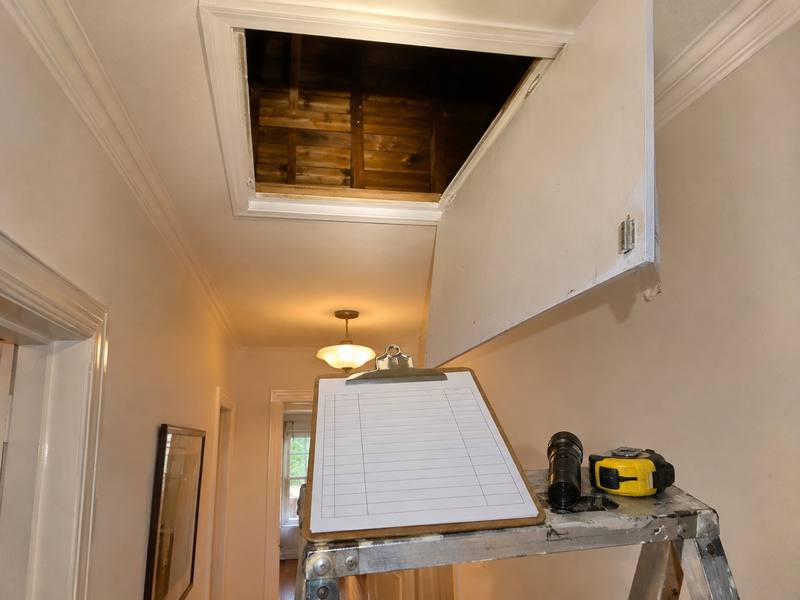
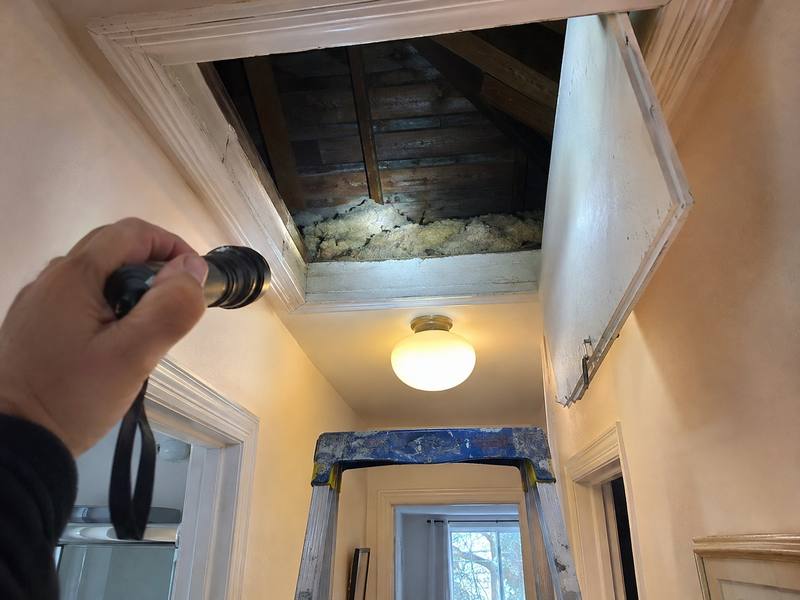
Before we quote attic insulation, we measure the depth across the whole floor and note where it gets thin. If you have knee walls (the short walls along the sides of a finished top floor), we check behind them as well, since the floor and the slope back there are sometimes bare. We also check the attic hatch. A hatch with no weatherstripping and nothing on its lid lets warm air from the rooms below go straight up into the attic.
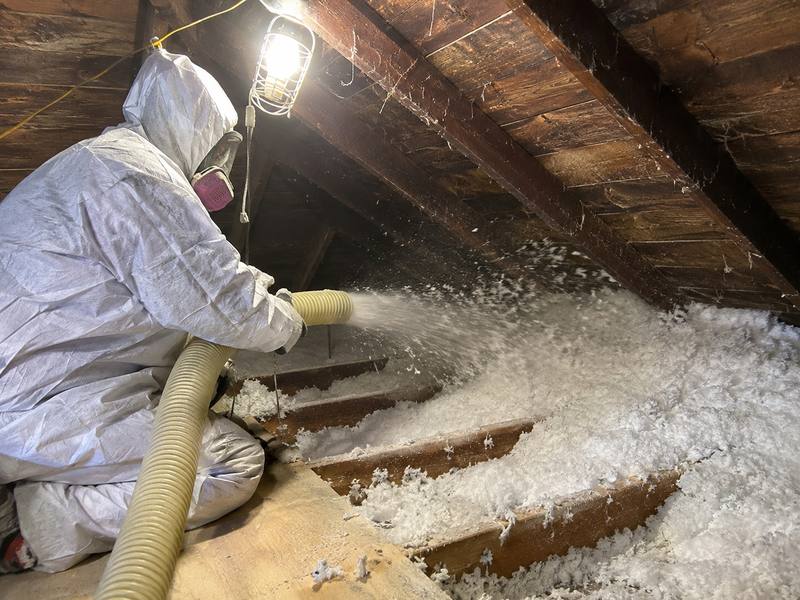
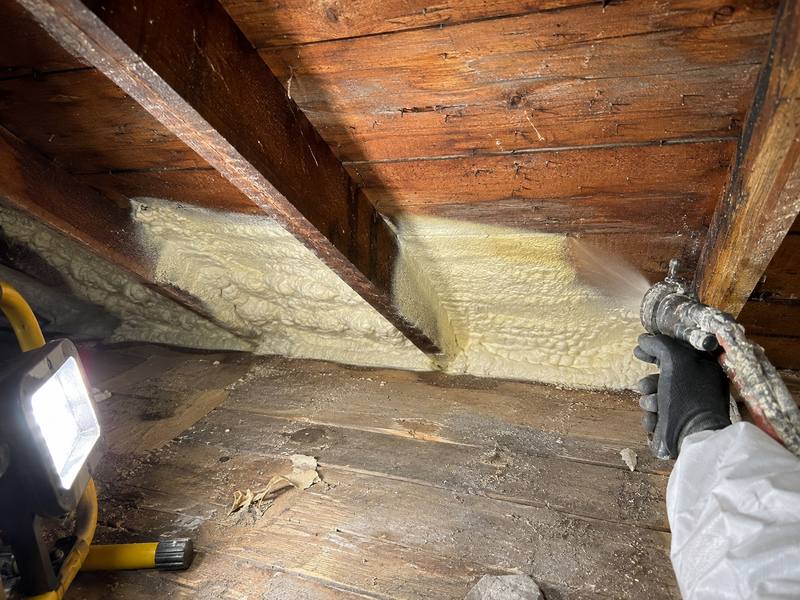
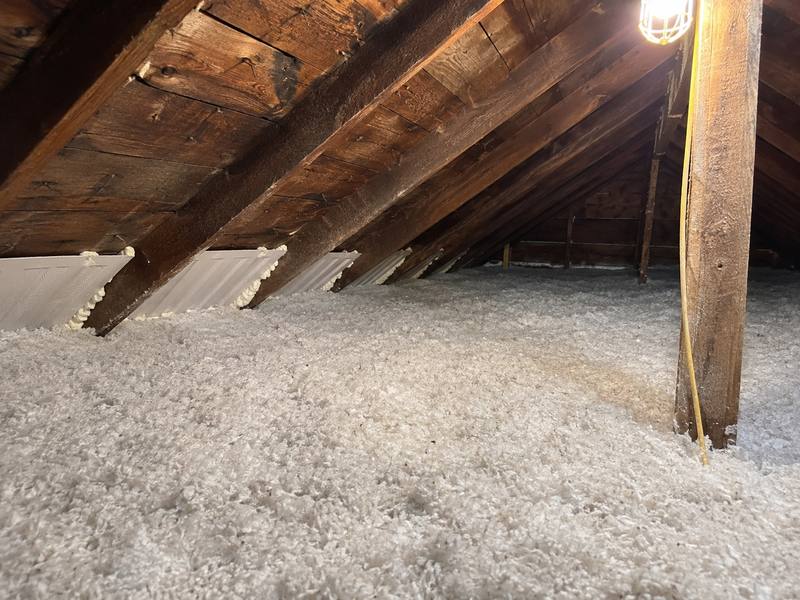
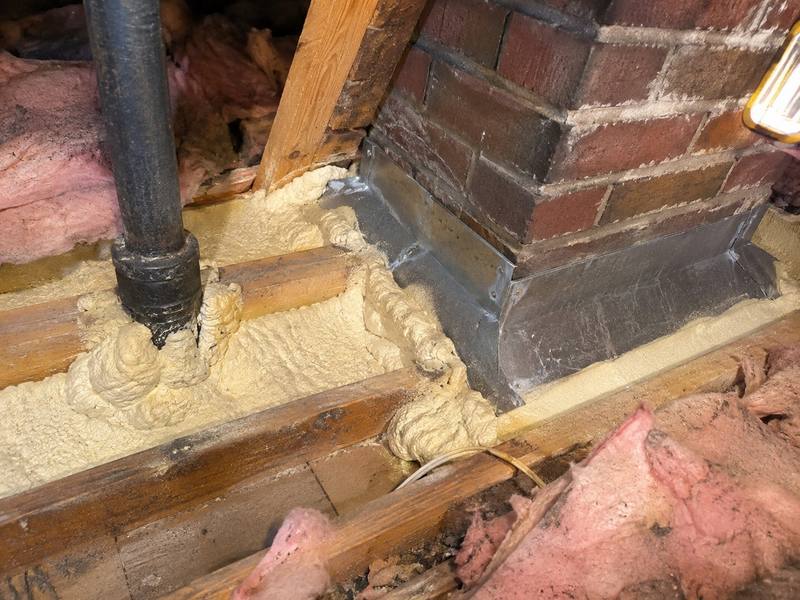
What we recommend depends on what we find. If the old insulation is dry and in good shape, blown-in cellulose or fibreglass can fill the low spots and bring the floor up to an even depth. Spray foam can make sense in tight spots loose fill won't reach, like behind a knee wall or along a sloped ceiling. If the insulation is wet, packed flat or chewed up by rodents, it comes out first so the new material goes onto a clean floor.
Old layers and vermiculite in Rosedale attics
In a Rosedale attic, the top layer doesn't always tell you what's underneath. Newer fibreglass batts or blown-in fill may be sitting on an older material, so we look under the top layer before we decide anything.
The one to watch for is vermiculite. It's a loose, pebbly fill, grey-brown or silvery gold, and some of it contains asbestos. If we find it, we stop and leave it alone. We'll recommend you have it tested by a qualified lab or abatement firm before any work goes ahead. Our page on vermiculite in attics explains why testing comes first.
If the lower layers aren't vermiculite and they're still dry, they may still be doing their job. Whether you keep them and add on top, or strip the attic down to the joists, comes down to moisture, droppings, mould and how flat the old layer has packed. Our guide on whether to top up or remove old attic insulation goes through the signs.
Houses among the ravines
Rosedale sits among three ravines, kept as parkland.
In any older attic, we check the ventilation before adding insulation. Soffit and roof vents let outside air move through and carry moisture out. A deep new layer can block the soffits unless baffles keep it back from the eaves. Our page on attic ventilation explains how intake and exhaust need to balance.
Nearby: Summerhill, Moore Park and The Danforth
Just to the west, our Summerhill page covers the attic work we do there.
Up north, there's a page on attic insulation in Moore Park. We start there the same way: depth, old layers and air leaks.
Over the valley to the east, The Danforth has its own page on attic insulation there.
Local details for Rosedale
- Postal codes: M4W
- Distance: About 4 km away in a straight line
- Permit rules: toronto.ca
- Nearby: Summerhill, Moore Park, The Danforth
About Rosedale: Rosedale, ON on Wikipedia · Rosedale on Google Maps
FAQ
Insulation questions from Rosedale
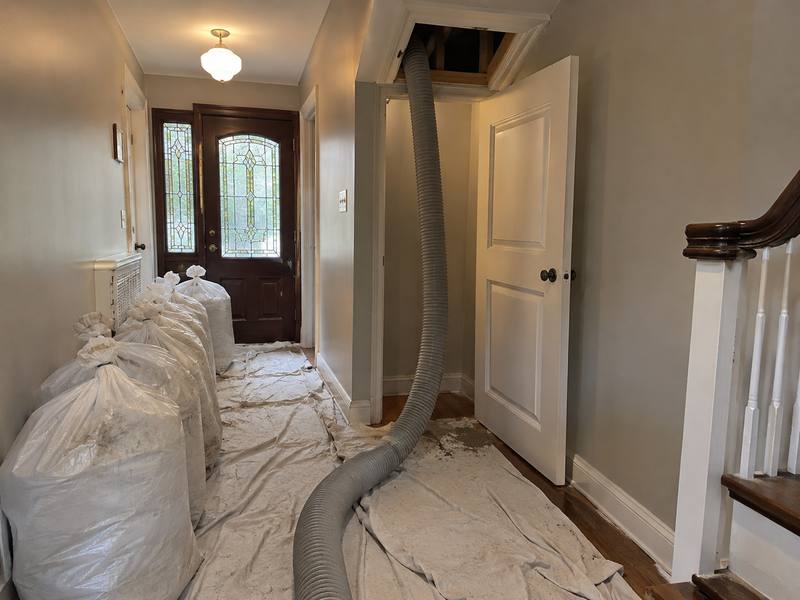
Yes. In a Rosedale century home, most of the work happens in the attic, and we get in through the hatch without opening any walls. A hose carries blown-in insulation across the attic floor. If the walls need insulating too, dense-pack insulation can go in through small holes in the wall surface, which get patched afterwards.
Only if they're wet, mouldy, packed flat or damaged by rodents. Dry layers in good shape can stay, and we air seal and top up over them. If any layer turns out to be vermiculite, nobody touches it until a qualified lab or abatement firm has tested it.
Yes. A Victorian attic needs working ventilation before more insulation goes in, because a deeper layer holds in more moisture if it has nowhere to go. Watch for frost on the roof sheathing in winter, damp or stained wood, and soffit vents buried under old insulation. Baffles at the eaves keep the new layer from blocking incoming air.

Next step
Request an insulation visit in Rosedale
Call us, or send the form with your address and whatever you've noticed upstairs. We'll look at the attic, tell you which of the four outcomes fits, and put the work in a written quote.