Blown-In Attic Insulation in Toronto, ON
Loose fibreglass or cellulose blown over the attic floor, after the air sealing and baffles are done.
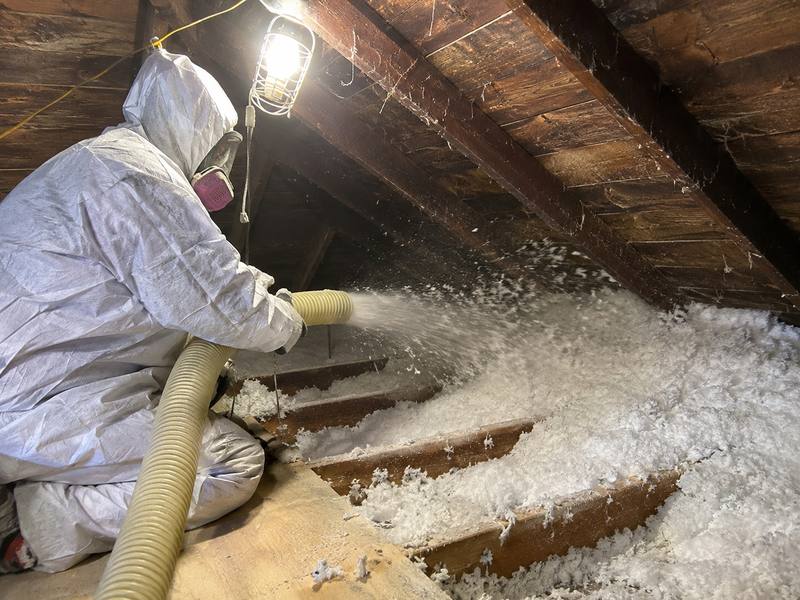
Blown-in attic insulation in Toronto is loose fibreglass or cellulose that we blow through a hose across the attic floor. It gets in around joists, wires and awkward framing in a way batts can't. It works for most older homes with an open attic over a flat ceiling. Many attics need a top-up, not a tear-out.
How blown-in attic insulation is installed
Blown-in attic insulation is loose fill that runs from a machine in the truck, up a long hose, and gets spread over the attic floor. The blowing is the easy part. What matters is the order. We start with air sealing, closing the gaps around pot lights, plumbing stacks, wire holes and the top plates of interior walls with foam or caulk. Warm, damp air from the house leaks up through those gaps, and in winter it frosts the underside of the roof deck.
Then we put baffles in at the eaves, between the rafters, so the soffit vents stay open. We staple depth markers to the ceiling joists across the attic and turn each one to face the opening, so you can read them from there. Only after that does the loose fill go in. We start in the far corners and work back toward the attic hatch until the whole floor sits at an even depth, over and between the joists.
The hatch is the last thing we do. We fix rigid insulation to the back of the attic hatch and weatherstrip the frame. Leave the hatch bare and you have a cold square in the middle of an otherwise warm ceiling.
Blown-in fibreglass or cellulose
Both do the same job, and both come by the bag as loose fill. They behave differently once they're up there, though, and that's how we decide which one to bring.
- Weight on the ceiling: fibreglass is lighter. Cellulose weighs more for the same R-value.
- Dust during the install: both are dusty, but cellulose sends more fine dust down through any gap around the hatch.
- Settling: fibreglass keeps its depth. Cellulose loses some, so it needs extra depth on the day.
- Moisture: fibreglass dries out and carries on working. Cellulose mats down after a leak and has to come out.
- Filling around obstacles: cellulose flows into tight spots around wiring and framing, while fibreglass bridges over some of them.
- Air movement through the layer: cellulose slows it more, so fibreglass relies more on the air sealing underneath.
Blown-in fibreglass
Blown-in fibreglass is spun glass in small tufts. It's light, it doesn't soak up water, and it barely settles, so the depth we leave is about the depth you keep. It gives less R-value per inch than cellulose, so it goes in deeper for the same rating. We usually use it in attics that have ever been damp, or where the old plaster underneath shouldn't take extra weight.
Blown-in cellulose
Blown-in cellulose is shredded paper treated with fire retardant. It's denser, packs tighter around wiring and blocking, and slows air through the layer more than fibreglass. It also settles more in the first months, and it holds water if a roof leak gets to it. We use it in dry, sound attics that are crowded with obstructions, and we blow it past the target depth to leave room for settling.
Topping up an existing attic
An attic top-up is often all an older attic needs. New loose fill can go right on top of the old insulation, provided the old layer is dry and clean. Old batts, loose rock wool and earlier fibreglass all keep doing their job under a new layer, and leaving them there spares you the mess of a tear-out.
Some material does have to come out first. Insulation that's wet, mouldy, matted from a roof leak or full of rodent droppings goes, because a fresh layer on top just hides the problem. Vermiculite, the grey-brown pebbly fill found in some older attics, is a different case: we stop, and nothing goes over it until a qualified lab or abatement firm has tested it. We go through how we decide in how to tell whether to top up or remove old attic insulation.
Settling, depth markers and the R-value you are paying for
Every bag of loose fill has a coverage chart that links installed depth to R-value and says how many bags cover a given area. The R-value on your quote is only real if the material reaches the depth on that chart. For cellulose, that means the settled depth, not the depth on install day.
As a reference point, SB-12 sets a minimum nominal R-60 for a ceiling with attic space in most compliance packages for new houses in Zone 1, and R-50 in the others. That rule is for new construction. We use it as a benchmark when we plan a top-up on an older house.
You can check the depth yourself:
- Open the attic hatch with a flashlight and look for cardboard rulers stapled upright to the ceiling joists, printed with depth lines.
- Read where the top of the insulation meets each marker. Check one near the hatch and one at the far end, because the far corners are where depth tends to come up short.
- Compare what you read with the depth the bag chart gives for the R-value on your quote.
- Look again after the first winter. If cellulose reads below its target line, it has settled more than it should. Fibreglass should read close to where it started.
- Keep your weight on the joists. Between them is drywall or plaster, and it won't hold you.
Baffles and ventilation come first
Baffles keep loose fill out of the soffit vents. A baffle is a stiff foam or cardboard channel stapled under the roof deck between the rafters at the eaves. It keeps an open air path from the soffit into the attic even with insulation piled up against it.
Skip the baffles and blown-in insulation drifts into the eaves and blocks the vents. Outside air stops moving through the attic, moisture from the house collects on the cold roof boards, and in winter you get frost on the nail tips and, later, ice dams along the gutters. Shallow eaves, or soffits that were painted shut or covered over, can choke that airflow, so we check intake and exhaust before we quote. Our attic ventilation page covers the rest.
Rebates for blown-in attic insulation
Home Renovation Savings offers an attic insulation rebate that doesn't need a home energy assessment. So a plain top-up is one of the easier upgrades to claim: there's no assessment visit to book beforehand.
The program decides the amounts and which products qualify, and either can change, so check the current terms before work starts. Hang on to the product labels, the bag count, the invoice and photos of the depth markers. Between them they show what went in and how deep. Our attic insulation rebates page explains how a claim fits around the job.
Downsides of blown-in insulation
Blown-in insulation does have drawbacks, and it's worth knowing them before you pick it.
- Settling: cellulose loses some depth over time, so it has to go in deeper than the target to end up at the right R-value.
- Dust: it's a dusty job in the attic and around the hatch, so we cover the floor below and shut off the rooms nearby.
- Wind near the eaves: air coming in through the soffit vents can push loose fill back and thin it out, unless baffles hold it in place.
- Access: a deep loose layer buries wiring, junction boxes and ceiling fixtures, so any later electrical work means raking it aside and putting it back.
Where spray foam does the job better
Loose fill needs a fairly flat attic floor to sit on. Sloped ceilings, knee walls, rim joists and other tight spots are better done with spray foam insulation, which stays where it's sprayed and seals air as it goes on. Some attics need both: foam in the awkward places, blown-in over the open attic floor.
FAQ
Common questions about blown-in attic insulation
The main downsides of blown-in insulation are settling, dust during the install, loose fill getting blown around near the eaves, and a deep layer covering wiring you might need later. Settling is mostly a cellulose issue, so it gets blown past its target depth. Baffles at the eaves deal with the wind, and sloped ceilings or tight spots are usually better with spray foam.
Yes, blown-in insulation can go over old insulation if the old layer is dry and has no mould or rodent damage. The old material keeps adding R-value underneath. Wet or damaged insulation comes out first, and vermiculite is left alone until a qualified lab or abatement firm has tested it.
Fibreglass is the better pick for attics that have had moisture or that sit over fragile plaster ceilings, and cellulose is better for dry attics full of wiring and framing. Fibreglass is lighter and hardly settles. Cellulose fills tight gaps more completely and slows air movement more, but it settles and holds water if the roof leaks.
It depends on the attic. The air sealing, baffles, depth markers and hatch take longer than blowing the loose fill, which is the quickest part. A lot of air sealing, or a cramped attic under a low roof, adds time, and we tell you what to expect when we quote.

Next step
Book an attic insulation inspection in Toronto
Call us, or send the form with your address and whatever you've noticed upstairs. We'll look at the attic, tell you which of the four outcomes fits, and put the work in a written quote.