Attic Insulation in Roselawn, ON
Before we quote a top-up or a removal in Roselawn, we look at what's already in the attic and where air is getting through.
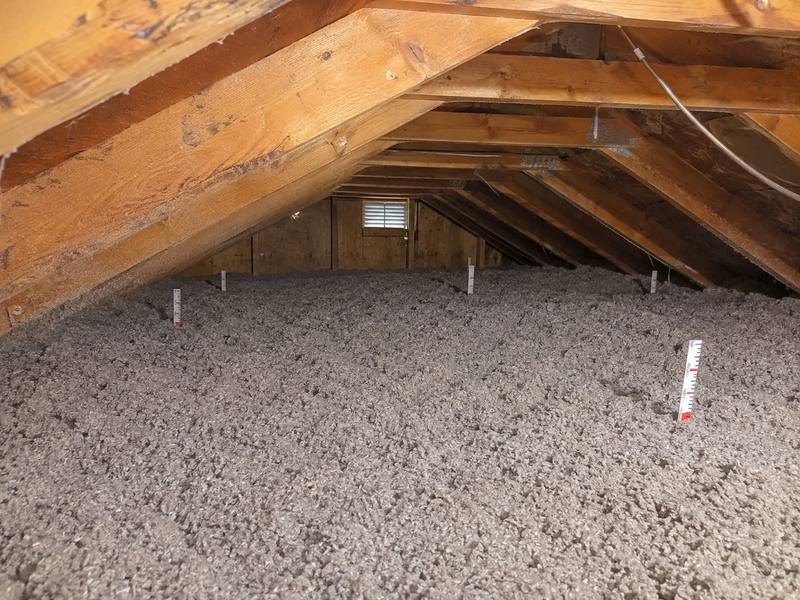
We do attic insulation in Roselawn, across the M5N postal code. We're about 4 km from Roselawn. When we're called to a Roselawn attic, we check the depth, the condition, the air leaks and the ventilation before we suggest any work.
What we check first in a Roselawn attic
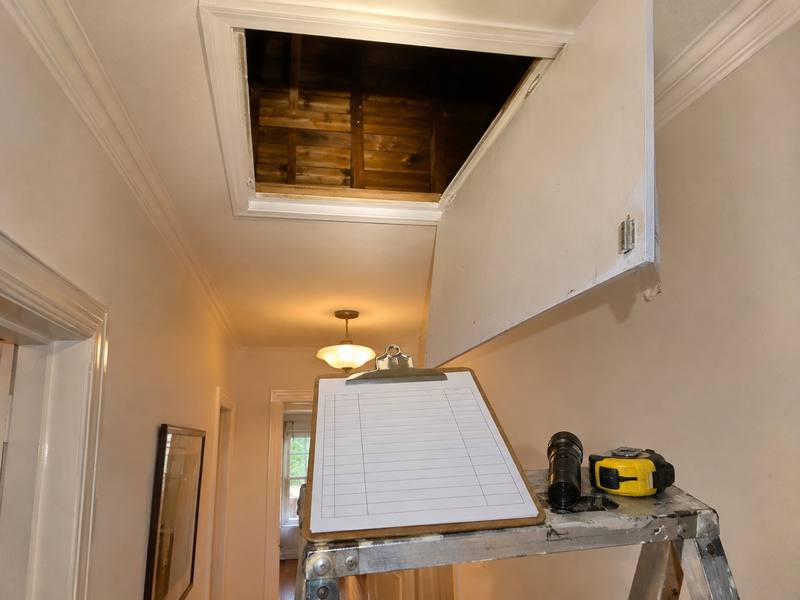
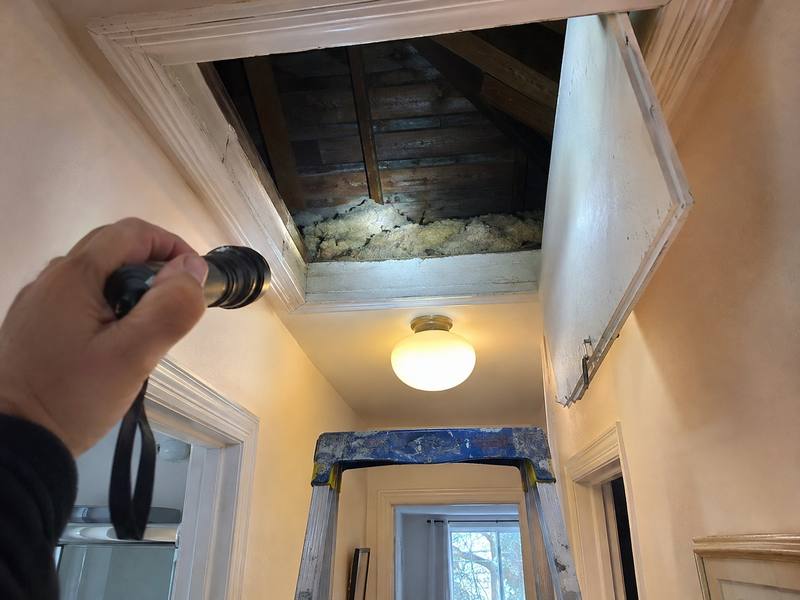
We start at the attic hatch with a flashlight and a ruler. Depth is the first number we want: how many inches of insulation are on the attic floor, and whether that holds all the way out to the eaves or thins to almost nothing where the roof meets the outside walls. The middle can look generous while the edges are bare, and the edges are where a lot of heat gets out.
Then condition. Dry, fluffy insulation is still working, even if it's old. Once it's matted, stained, wet or full of droppings, most of its value is gone, and laying new material on top just buries the problem.
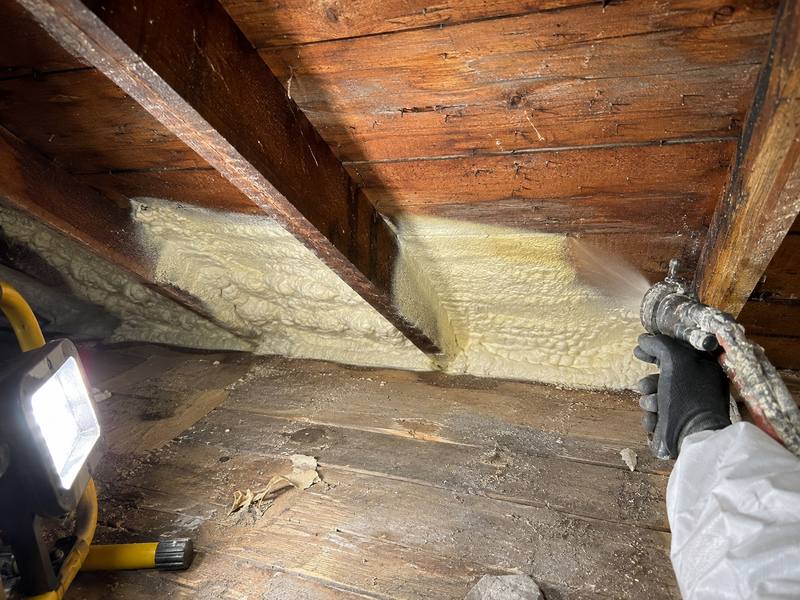
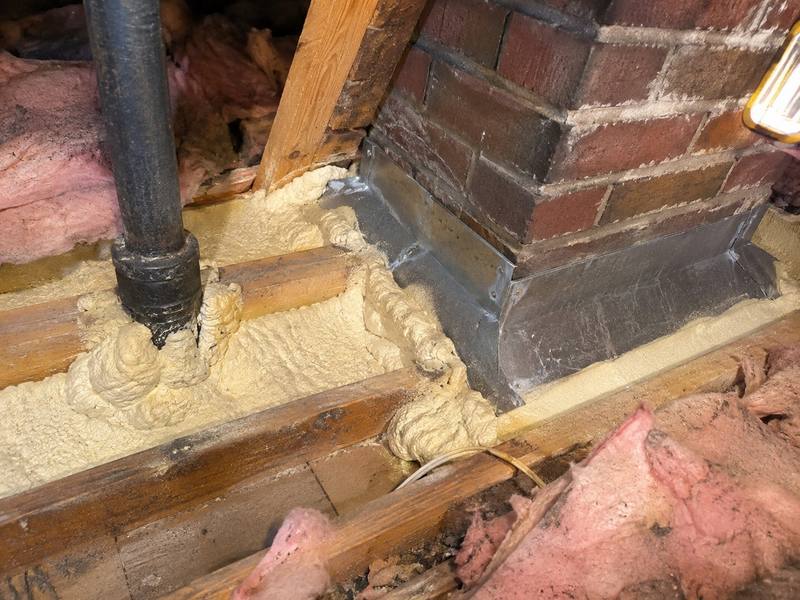
Next we look for air leaks. Warm air from the rooms below finds its way up through gaps around light fixtures, plumbing stacks, wiring holes, chimney chases and the hatch itself. You can often spot these as dark streaks on the insulation, because the fibres catch dust out of the air moving through them. Sealing those gaps is part of the attic insulation work we quote. Insulation slows heat down, but it does very little against air that's moving.
Ventilation comes last. We check for soffit vents at the eaves, whether they're clear, and whether air has a way out near the ridge or through roof vents. If we see loose grey-brown or gold granules that look like vermiculite, we stop. We leave it alone and recommend you have it tested by a qualified lab or abatement firm before any work goes ahead.
Baffles before a top-up
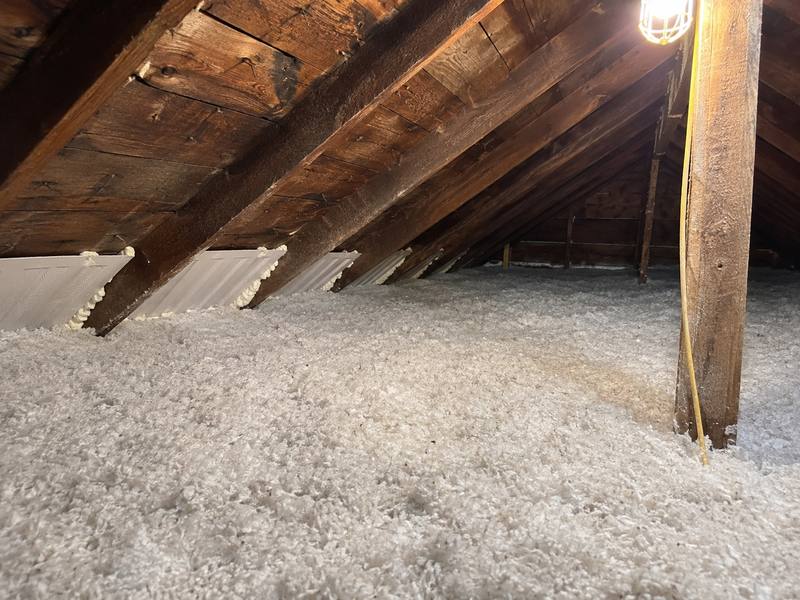
Attic baffles go in before any new insulation. A baffle is a rigid foam or cardboard channel fastened between the rafters just above the outside wall. It keeps a gap open between the roof deck and the insulation, so air coming in at the soffit vents can move up under the roof.
Skip the baffles and an attic insulation top-up can bury the soffit vents. Loose fill drifts into the eaves, plugs them, and the attic loses its intake air. Come winter, warm moist air leaking up from the house has nowhere to go, and it can build up as frost on the underside of the roof deck. When the weather turns, that frost melts into the insulation and the wood. Our page on attic ventilation explains how intake at the soffits and exhaust near the ridge work together.
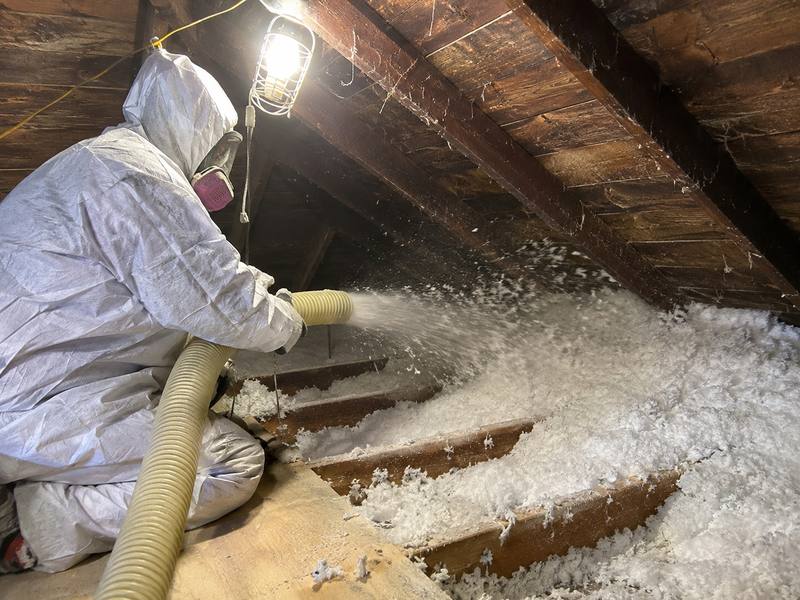
With the baffles in and the leaks sealed, we blow loose fill across the attic floor to an even depth. Depth rulers get fastened to the framing so you can check the level from the hatch later. Blown-in insulation fills in around joists, wiring and awkward framing, where batts leave gaps wherever they've been cut to fit. If the existing layer is dry and clean, it can stay, and the top-up goes over it.
When a Roselawn attic needs removal instead
An attic needs removal when the insulation up there is wet, mouldy or damaged by rodents. Topping up over any of that just seals the damage in. Wet insulation stays damp under the new layer, mould keeps growing on the wood underneath, and the droppings and nesting stay right above your ceiling.
Water usually gets into attic insulation from a roof leak, a bathroom fan venting into the attic instead of outside, or frost on the roof deck that melted. The source has to be fixed before new insulation goes in, or the new layer ends up the same way. Rodents leave tunnels, flattened runs and droppings through the insulation, and they tend to get in through gaps along the eaves.
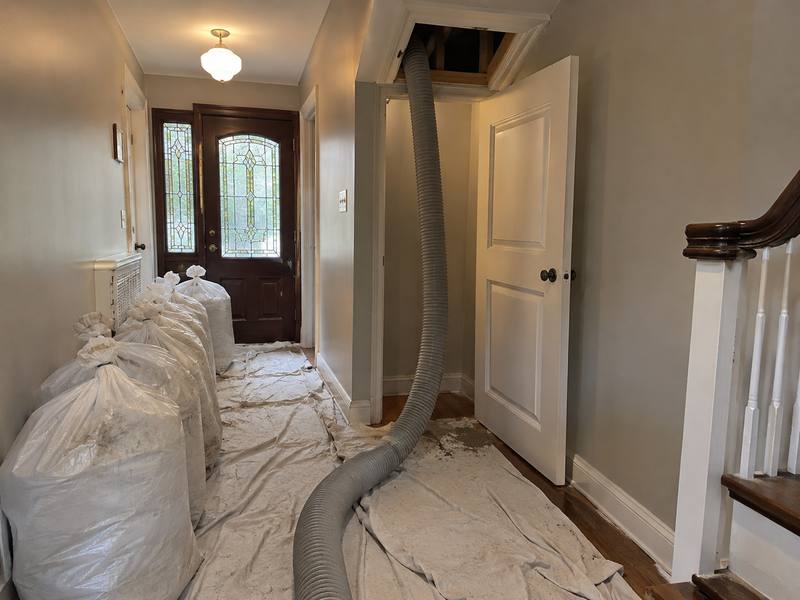
Attic insulation removal means vacuuming the old material out through a big hose into bags outside, then cleaning the attic floor. Once the floor is bare, every gap around wires, pipes and the tops of interior walls is easy to see and seal. Then the baffles go in, and the new insulation is blown onto a clean deck.
In Roselawn, adding or replacing insulation is on the city's list of work that doesn't need a building permit. Zoning rules still apply.
Nearby: Forest Hill, Davisville and Lawrence Park
The closest areas we serve to Roselawn are Forest Hill, Davisville and Lawrence Park. If your house is just over one of those lines, we have pages on attic insulation in Forest Hill, Davisville and Lawrence Park. The boundary doesn't change how we work. We look first, seal the leaks, keep the soffit vents open, and only add insulation where the depth falls short.
Local details for Roselawn
- Postal codes: M5N
- Distance: About 4 km away in a straight line
- Permit rules: toronto.ca
- Nearby: Forest Hill, Davisville, Lawrence Park
FAQ
Insulation questions from Roselawn
An attic check in Roselawn means we look in from the hatch, and walk the framing where it's safe, to measure the insulation depth and see what shape it's in. We look for air leaks around fixtures, pipes and the hatch, and make sure the soffit vents are open and air can get out near the roof peak. Then we tell you what's worth doing, if anything.
Yes. If the attic has soffit vents, the baffles go in before the blown-in insulation. Loose fill drifts into the eaves and blocks the vents, and a baffle keeps an air channel open above it. Without that channel, moisture from the house can collect under the roof deck in winter.
Partly. From the hatch we can see the insulation depth near the opening, whether it's matted or stained, and any signs of rodents or old leaks. What we can't see from there is the edges of the attic, where insulation thins out at the eaves and vents get blocked, so we check those before we quote. If the material near the hatch looks like vermiculite, we stop and recommend testing by a qualified lab or abatement firm first.

Next step
Request an insulation visit in Roselawn
Call us, or send the form with your address and whatever you've noticed upstairs. We'll look at the attic, tell you which of the four outcomes fits, and put the work in a written quote.